A featured contribution from Leadership Perspectives: a curated forum reserved for leaders nominated by our subscribers and vetted by our editorial board.

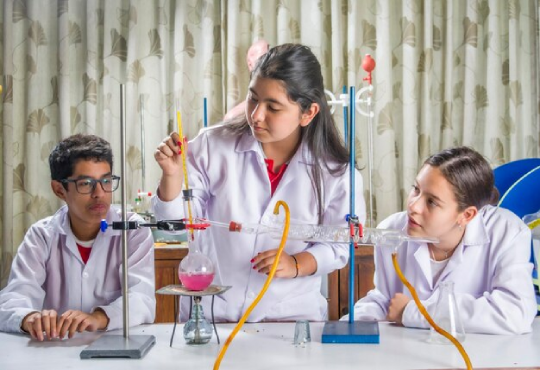
The Department of Science and Technology (DST), under the Ministry of Science and Technology, Government of India, has introduced stricter eligibility and funding rules for its Innovation in Science Pursuit for Inspired Research (INSPIRE) – Scholarship for Higher Education (SHE) programme. The revised guidelines bring significant changes to scholarship continuation, research mentorship funding and the allocation of scholarships among education boards, directly affecting students pursuing undergraduate and postgraduate science courses.
The centrally administered scholarship is open to eligible students across India, covering candidates from state and central education boards. The revised guidelines apply to the 2025 batch of INSPIRE-SHE, with eligible candidates able to submit their applications until December 7, 2026, at 11:59 p.m. The programme offers around 12,000 scholarships annually to encourage talented students to pursue basic and natural sciences and consider research as a career. For the current application cycle, candidates must be aged 17–22 and have completed Class 12 in 2025, along with meeting the prescribed eligibility requirements.
Students Face Stricter Scholarship Continuation Rules
One of the most significant changes concerns academic performance. Under the earlier 2024 guidelines, students who failed an examination or could not appear for it would lose their scholarship for that academic year but could regain eligibility in subsequent years by meeting the prescribed academic requirements.
The revised 2025 guidelines remove this flexibility. Students who fail or secure less than 60% marks or a 7 Cumulative Grade Point Average (CGPA) in their first year will become ineligible for the scholarship throughout the entire programme. Failure in subsequent academic years will also result in immediate discontinuation of scholarship benefits.
This change places greater academic pressure on students who depend on government financial assistance to complete their science degrees.
Research Mentorship Funding Reduced by ₹60,000
The revised framework also reduces the overall financial assistance available to scholarship recipients. The monthly scholarship remains unchanged at ₹5,000, providing ₹60,000 annually. However, the additional ₹20,000 research mentorship grant, previously available every year, will now be restricted to the third and fourth years of the programme.
Consequently, the maximum financial support over five years will decrease from ₹4 lakh to ₹3.4 lakh.
This reduction could affect students who depend on mentorship funding to undertake summer research projects, gain laboratory exposure and work with experienced researchers.
Also Read: Five Educational Leaders Inspiring a New Generation
Scholarship Allocation Formula Changes
The government has also revised the method of distributing scholarships among education boards. Under the previous system, each board's share was determined by the proportion of valid scholarship applications received. The revised framework links allocations to the number of students appearing for Class 12 examinations under each board.
The change has raised concerns about regional representation and competition among eligible applicants. According to the report, Uttar Pradesh's allocation has fallen from 6,129 scholarships in the previous cycle to 2,095 under the revised formula.
More Science Subjects Added to the Scholarship
Alongside the stricter academic and financial conditions, the revised guidelines expand the range of eligible undergraduate science disciplines from 18 to 28. Biotechnology, bioinformatics, biostatistics, environmental science, data science, materials science, nanoscience, life sciences and earth sciences are among the additional subjects included. The postgraduate subject list has also expanded from 30 to 35.
The revised framework also introduces a course-wise preference order for scholarship selection. Students enrolled in integrated Master of Science (MSc) and Bachelor of Science–Master of Science (BS-MS) programmes who meet the top 1% board-performance criterion receive priority, followed by candidates qualifying through specified national-level examinations and other recognised achievements.
Another important change concerns eligibility for the INSPIRE Fellowship for doctoral studies. The revised provisions recognise four-year Bachelor of Science (BSc) Honours and BSc with Research degrees comprising at least eight semesters, alongside eligible postgraduate qualifications, subject to the prescribed academic criteria.
Experts Highlight the Importance of Early Research Exposure
Akhil Tripathi, co-founder of science education platform SciAstra, highlighted the importance of mentorship funding during the initial years of higher education.
He explained:
"In the first two years, the ₹20,000 grant is what lets a student take up a proper research project, and that early exposure often decides who stays in science."
With applications open until December 7, the revised INSPIRE-SHE framework represents a significant shift in India's science scholarship system. While the expansion of eligible subjects creates opportunities for students across more disciplines, reduced research assistance and stricter continuation requirements have raised questions about financial accessibility and the long-term development of India's scientific talent.