A featured contribution from Leadership Perspectives: a curated forum reserved for leaders nominated by our subscribers and vetted by our editorial board.

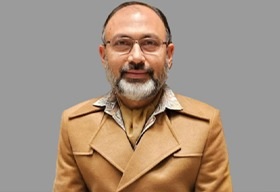
Manoj Bhuraria, a retired Indian Navy officer, is now a certified Life Coach, Counsellor, NLP Practitioner, and Author. With over 35 years of naval experience, including his tenure as Principal Director at Naval HQ, he mentors and guides young professionals through his venture Marg-Darshan. He is the author of ‘How Our Children Brought Us Up’ and draws inspiration from classics like Mitch Albom’s Tuesdays with Morrie to foster holistic personal and professional growth.
In a recent interview with M R Yuvatha, Senior Correspondent at siliconindia, Manoj Bhuraria shared his insights on the role of the Guru-Shishya mentor-mentee model in fostering holistic, ethical, and purpose-driven leadership.
In an age where organizations seek meaningful leadership and sustainable growth, the timeless Guru-Shishya model emerges as a profound mentorship framework that transcends technical skill development. Within today’s global workplaces, where unconscious bias and leadership gaps persist, this holistic approach inspires inclusive, balanced leadership pipelines by reimagining the traditional Guru-Shiksha philosophy into a modern, purpose driven mentor-mentee practice.
Traditionally, a Guru was seen as someone who led a Shishya from ignorance to knowledge in a deeply holistic manner. Over time, however, the term ‘Guru’ has been used loosely, diluting its original depth and intent. In modern organizations, this essence is better reflected through a mentor-mentee model, where the mentor embodies the core values of a Guru. This model emphasizes one-on-one engagement, early intervention in an employee’s career, and long-term development rather than transactional skill transfer.
Adapting Mentorship in Hybrid and Digital Work Environments
In today’s hybrid and digitally driven work environment, organizations face challenges of physical distance, time-zone differences, and increasingly impersonal interactions. Yet, several global and Indian organizations such as Microsoft, GE, Adobe, Tata Steel, L&T, among others have successfully embedded structured mentorship into their leadership development frameworks. A critical factor behind this success is top leadership commitment. When senior leadership consciously prioritizes mentorship, it becomes ingrained in organizational culture.
Such mentorship goes beyond competence building to include ethics, collaboration, emotional resilience, and emotional intelligence. This holistic development enables organizations to consistently nurture capable, inclusive, and emotionally grounded leaders for long-term success.
An adapted Guru-Shishya model provides grounding, instills holistic values, and ensures purpose-driven leadership in the face of rapid technological and organizational change.
Fostering Talent Retention and Innovation in Startups
Mentorship is increasingly seen as a long-term, evolving relationship rather than one that ends with performance cycles or short-term outcomes. In fast-moving tech startups, where agility, innovation, and talent retention are critical, the mentor–mentee approach plays a vital role in reshaping workforce commitment. Over the decades, employment trends have shifted from long tenures to frequent job changes driven by compensation and rapid opportunities, leading to a weakening sense of belonging.
To address this, organizations must adapt the mentor-mentee model to today’s realities while preserving its core spirit. Modern employees seek not only skill development but also mature guidance, trust, and alignment with organizational vision. Industry observations show that many high-growth startups and global tech leaders have thrived by fostering shared learning, long-term trust, and inherent mentorship cultures. Founders and leaders who embed mentorship into their organizational DNA create environments where innovation flourishes organically.
When driven from the top, such cultures encourage fulfillment, trust and belonging, enabling startups to retain talent and sustain innovation despite rapid change.
Navigating Challenges in Flat Organizational Structures
Respect for the Guru has traditionally been central to the Guru-Shishya model, yet modern organizations increasingly operate with flat structures that emphasize agility, openness, and dialogue. Applying this model in such environments presents challenges, particularly the risk of perceived power imbalances. Any transformative practice introduces resistance, but progressive adaptation of traditional values allows organizations to retain relevance without rigidity.
Workplace norms have evolved significantly over decades, shifting from strict hierarchies to more informal, name-based interactions. This evolution signals that while structures may flatten, the essence of mentorship trust, respect, and wisdom must remain intact. A mentor is naturally accepted not by position alone, but through maturity, credibility, and the ability to radiate insight.
Many organizations address this by appointing senior figures in emeritus or advisory roles. When mentorship focuses on guidance rather than control, it enhances engagement, camaraderie, and productivity while retaining depth and purpose.
The Role of Mentorship in an AI-Driven Future
As organizations prepare for AI-driven disruption and uncertainty, structured learning alone is proving insufficient. While artificial intelligence continues to evolve at an unprecedented pace, the Guru-Shishya inspired mentor-mentee model offers a powerful counterbalance by transferring intuition, lived experience, and contextual wisdom. This adapted model provides grounding at a time when technological change can feel overwhelming and destabilizing for the workforce.
The role of the mentor extends beyond technical guidance. The true test of mentorship lies in instilling a holistic vision, humane values, and ethical clarity among employees developing and deploying AI systems. As younger professionals confront rapid and often unsettling technological shifts, mentors serve as stabilizing forces, offering emotional resilience, conflict resolution, and calm confidence amid uncertainty.
Many organizations institutionalize this role through senior advisory positions such as honorary chairs or mentor figures who operate beyond operational hierarchies. Their responsibility is not skill instruction, but wisdom sharing.
Guru-Shishya Approach to Sustainable Leadership
The ethos of the Guru-Shishya model, rooted in service, purpose, and alignment beyond personal gain, offers modern organizations a pathway to shift from purely profit-driven objectives to building socially impactful and sustainable cultures. In highly competitive business environments, there is a risk that focus on success can overshadow responsibility toward society. The adapted mentor-mentee model provides a mechanism to instill this value-driven mindset, particularly among emerging managers and employees.
Industry experience demonstrates that senior mentors, often in roles such as professor emeritus or honorary advisors, play a crucial role in guiding employees to see beyond immediate tasks and focus on long-term societal impact. They provide a holistic perspective, reinforcing that organizational priorities extend beyond profits to include social responsibility, sustainability, and ethical conduct.
A notable example is Tata Group, whose leadership has historically emphasized purpose-driven business and long-term societal impact alongside profitability. By embedding mentorship at senior levels, the organization ensures that employees internalize values of service, ethics, and social consciousness.
In Essence!
Leveraging an adapted Guru-Shishya model enables organizations to cultivate a purpose-driven culture, fostering leaders who balance profit with social responsibility and create sustainable impact for both business and society.