A featured contribution from Leadership Perspectives: a curated forum reserved for leaders nominated by our subscribers and vetted by our editorial board.

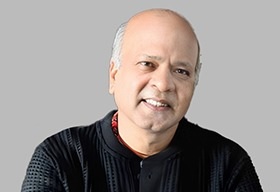
Sunil Shetye is a life coach and healer with over 25 years of hands-on experience in meditation, consciousness, and holistic well-being. He works closely with people on their journey of self-discovery, personal growth, and emotional balance, combining age-old healing wisdom with practical modern approaches. Through his understanding of energy work, chakras, and self-healing he helps individuals strengthen their inner resilience, overcome challenges, and live with greater clarity and purpose.
In a recent interview with Priyanka R, Copywriter at siliconindia, Sunil, shared his insights on 'Empowering Workforces Through Inner Balance and Self-Mastery'.
Personality is an awakening of our consciousness and manifests in the form of mental, emotional, and subtle currents of energy, as Tamas, Rajas, and Sattvic qualities. Life experiences generate contrasting aspects of our being and form our modes of thinking, feeling, judging, and acting. Emotional intelligence is built upon a balancing act of the head and heart centers, where logic and emotion meet in harmony. Our action predispositions indicate where we are balanced and where we are unbalanced. People with a well-balanced nature may have fewer life challenges in life, but an imbalanced nature demands greater self-control. Management of ego, anger, jealousy, and disconnect between emotion and reasoning is essential to be well-balanced in life and be successful in all walks of life.
Inner Balance as the Hidden Drive of High Performing Teams
Effective organizations may seem messy and disjointed in their operations, but always perform better than the rest. This is because of the subtle dynamic change that occurs in the inner balance for self-control.
Human personality is based on consciousness as well as past and current experiences. Our capacity to experience emotions, mental functions, and intuitive processes is affected by such experiences in terms of patterns of behaviour, strengths, and limitations. Although no one has balanced personality traits, there is functionality based on relative equity between reason and emotions.
In organizations, teams are a reflection of the inner states of individuals. Inner states such as ego, stress, or inner conflicts may impact group performance or results. Organizational teams will begin to function better when their inner states are balanced.
Through intentional efforts at recognizing and correcting inner imbalances, inner balances in teams are what help businesses achieve strong performance under pressure. The inner balance of teams serves as a silent motivator for success and innovation in overcoming various forms of obstacles and adversities in businesses.
Relying too heavily on AI can damage the human abilities of independent thought, logic, and creativity.
Fostering emotional resilience for sustained performance
As the incidence of burnout is on the increase, organizations will be able to tap into the increased cognitive and emotional potential of their teams through the ability to change from being ego-centered to being purpose-centered in their responses. Even as skills and credentials become important considerations in the selection or engagement of workers, their personalities tend to be the determining factor in how teams respond in organizations.
Inner harmony is created through the effective management of trigger responses, maintaining poise in times of stress, and making decisions in line with shared objectives rather than self-interest. This can be made possible in organizations through designed programs in the areas of lifestyle balance, work-life integration, as well as tailored meditation programs according to individual personality types.
When this kind of effort is made at an organizational level and no longer happens sporadically, the employees become better-equipped to deal with stress, burnout, and anxiety. It culminates in the development of self-awareness, emotional intelligence, and mental acuity, resulting in a better-aligned team and more effective decision-making and productivity over 6 to 18 months.
Addressing inner challenges to unlock performance and safety
In organizations, diversity in opinion between people, customers, and supervisors is unavoidable. Where personal opinions or solutions are not accepted, individuals choose not to experience or display emotions or ego, which leads to inner conflicts. Through this process, people become drained or burnt out in their work despite being competent.
Since teams that incorporate internal challenges train to acknowledge and coordinate both emotional and logical responses instead of repressing them, by developing their underdeveloped emotional components, people in teams become more competent in dealing with these differences in a calm and collective manner.
This allows for psychological safety, faster decision-making, and facilitates innovation with minimal internal friction. However, the true key is dealing with the internal imbalance rather than ignoring it.
The role of self-awareness in transforming AI assistance into a human advantage
While AI systems assume the responsibility of rule-based tasks, the speed and efficiency they offer are not only AI's forte but are also completely reliant on human control. AI produces generic results; experience, intelligence, and emotional intelligence are what make results meaningful, and this comes from human experience. The benefit does not lie in the use of AI but in its controlled use.
Relying too heavily on AI can damage the human abilities of independent thought, logic, and creativity. Since problems are being solved externally rather than being solved in one’s own mind, there would also be stagnation in personal growth. There has been a growing necessity in finding inner harmony to maintain control over one’s own life, manage one’s emotions, and use one’s discernment rather than simply consuming AI-generated information.
Also Read: Sunil Shetye: Bridging Ancient Wisdom & Modern Healing for Conscious Living
At an organization-wide level, leadership mindset determines employee behaviour and actions-what can be expected from teams in thinking, performance, and pressure, given the emotional maturity of the founders and senior leadership. Companies that are driven by short-term results only get trapped with burnouts and limited growth. On the other hand, companies that genuinely invest in emotional balance, lifestyle management, and work-life harmony build resilient and adaptive teams. The early signs of a strong trajectory include calm decision-making, psychological safety, and self-aware leadership that enables organizations to use human potential as a real strategic advantage rather than a liability.
In essence, the organization also mirrors the emotional quotient and personalities of the leaders and the founders of the organization. If the leaders and the management are not balancing or are only reacting to short-term demands, then they are creating an unhealthy work environment in the organization. Thus, in order for the organization to attain a stable environment, one of the major areas that the management and the leaders have to focus on is their personal balance and developing the personalities they are cultivating in the organization.