A featured contribution from Leadership Perspectives: a curated forum reserved for leaders nominated by our subscribers and vetted by our editorial board.

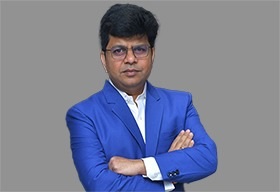
With 23+ years of global leadership experience and deep hands-on exposure across consumer lending, credit decisioning, and large-scale fintech platforms, Durgesh brings a rare blend of product, technology, and business leadership. He currently leads Lentra’s consumer lending business, working closely with banks and NBFCs to scale digital credit responsibly and profitably.
In an email interaction with Mandvi Singh, Managing Editor, siliconindia, Durgesh Nigam, EVP - Head of Product Excellence, Lentra has strived to detail consumer lending landscape through the topic Consumer Lending 2.0- From Fast Credit to Responsible, Scalable Credit.
The future of consumer lending has transformed figuratively today, and is further evolving with embedded finance, secure risk models, and open finance, changing credit assessment and providing borrowers a more holistic view of their risk profiles.
What are the biggest structural flaws in today's consumer lending boom?
India's lending growth has been remarkable but fast growth always has blind spots. The first problem is that too many lenders rely almost entirely on credit bureau scores. Bureau data is helpful, but a large chunk of India's borrowers like first-time credit users, people with informal incomes simply don't have enough bureau history. If lenders keep using the same old models for these customers, they won't see the risk coming until it's too late.
Second, many lending models have been developed over a period that has seen both stress phases like COVID and phases of strong liquidity support. While the system held up well, the real test lies in how these models perform across a wider range of evolving conditions
Those models haven't really been tested in a tough environment. When conditions get harder, the cracks show up often all at once.
Third, most lenders have figured out how to disburse loans quickly, but what happens after that is still broken in many places. Tracking the loan, following up on missed payments, handling fraud, restructuring when needed these are still handled in silos. Real profit comes from managing the full loan lifecycle well, not just from booking new loans fast. Lenders who treat these as one connected process have already started seeing better outcomes.
Finally, a lot of lending today happens through partnerships through embedded partnership through fintechs, merchants, platforms. When too many parties are involved and nobody is clearly responsible, things fall through the cracks that becomes a governance problem, and it needs to be taken care of and technology can play a role in this.
The lenders who will win the next phase aren't the fastest ones they're the most responsible ones.
How should banks and NBFCs rethink credit decisioning beyond bureau-led models?
Bureau scores are a good starting point, but they can't be the whole story especially when you're lending to people who are new to credit.
The real shift is from looking at a score to looking at signals. What does the customer's cash flow look like? How do they behave digitally? Are there any fraud red flags? What's the context of this loan - is it being taken at a store to buy something specific? All of this matters. At the point of sale, a lender often has just a few seconds to make a decision for a customer with little credit history.
That's where better data and smarter systems make the real difference. Risk models also can't be static. A model built last year may already be out of date. Lenders need systems that keep learning from what's happening in their portfolio right now. There's also no one-size-fits-all approach.
A salaried person in Mumbai and a daily-wage worker in a small town are very different borrowers. Treating them the same leads to bad decisions for both and credit decisions shouldn't stop at approval. Watching how a borrower behaves after the loan is given, like adjusting limits, flagging early trouble is just as important as the original decision.
Lenders who have connected all of these rules, models, compliance checks, fraud detection into a single real-time system are finding it gives them a real edge over those who haven't.
The lenders who grow sustainably aren't the ones who move fastest; they're the ones who've built something that holds together at scale.
How are banks rethinking underwriting and lifecycle management?
Three things are changing and they're all connected.
First, lenders are starting to look at the full picture of a customer rather than just one loan at a time. If someone already has a credit card, a personal loan, and now wants a consumer durable loan, all of that needs to be considered together. Approving each product in isolation is how lenders end up overexposed to a single borrower.
Second, the technology behind lending decisions is getting more flexible. Old systems were rigid and changing even a single rule could take weeks. Newer lending platforms let lenders update their policies quickly, which matters a lot when regulations change or when a new risk shows up in the market.
Third, collections are no longer just about calling customers after they've missed payments. Lenders are getting better at spotting trouble early like a salary that didn't come in, a change in spending behavior, a small missed payment on another product. The lenders who have this early warning built into their core systems and not added on later are already seeing fewer defaults and better recovery rates.
The edge today isn't being the fastest to approve a loan. It's being able to manage that loan well all the way to closure.
BNPL, personal loans, and embedded credit which models survive?
All three will survive but they'll have to grow up with time.
BNPL makes sense when the loan amounts are small, repayment periods are short, and the merchant is closely involved. Problems arise when it's used for expensive purchases without detailed checks. The BNPL players who have strong data from the point of sale and who lend responsibly will do fine. The ones who grew fast without discipline won't.
Small digital personal loans will keep growing. The difference between lenders who do well and those who struggle will come down to pricing the risk correctly and knowing their customer segments well.
Embedded credit loans offered directly within an app or at the checkout counter is a powerful idea because the loan fits naturally into what the customer is already doing. But it only works long-term if it's clear who is responsible for the credit decision, who handles complaints, and who owns the data. The models that sort this out clearly will last. The ones that don't will run into trouble both with customers and regulators. At the end of the day, growth gets you started. Good governance keeps you going.
Also Read: The Increasing Relevance of NBFCs in Today's Digital Age
How can lenders balance growth, risk, compliance, and customer experience?
True balance comes when teams are connected, not working in silos. When risk, compliance, and customer experience sit in separate systems, each team solves its own problem and nobody sees the full picture. A unified platform means that when a loan is being processed, the risk check, the compliance check, and the customer communication are all happening together, in the right order, automatically.
Before entering a new customer segment or launching a new product, lenders should be able to model what could go wrong, what happens to losses if defaults rise, what the capital impact looks like, and whether the product meets regulatory expectations. Increasingly, the decisions about how to build a lending platform are being made with exactly this kind of scenario testing in mind.
Compliance also can't be handled manually at this scale. Sending the right disclosures, capturing customer consent, maintaining audit trails all of this needs to be built into the lending workflow from the very start. Fixing it later is expensive and risky.
And treating customer experience as separate from risk is a mistake. When customers understand their loans clearly, there are fewer disputes. When lenders reach out early if a customer is struggling, fewer loans go bad. It's not just good service it's good risk management.
The lenders who grow sustainably aren't the ones who move fastest. They're the ones who've built something that holds together at scale.