A featured contribution from Leadership Perspectives: a curated forum reserved for leaders nominated by our subscribers and vetted by our editorial board.

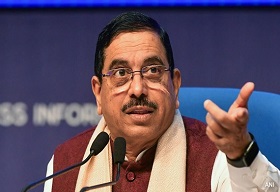
Union Education Minister Pralhad Joshi acknowledged that the education portfolio is new to him as he officially assumed charge, saying he will study the sector thoroughly before making decisions. He emphasized working closely with officials and stakeholders to advance reforms and strengthen India's education system.
Union Minister Pralhad Joshi officially assumed charge of the Ministry of Education on Sunday, stepping into one of the government's most closely watched portfolios at a time when India's education system is undergoing significant reforms and facing heightened public scrutiny. Taking over the responsibility following the resignation of former Education Minister Dharmendra Pradhan, Joshi acknowledged that education is a completely new domain for him but expressed confidence in learning quickly and delivering on the responsibilities entrusted to him by Prime Minister Narendra Modi.
Speaking to reporters shortly after taking charge at Kartavya Bhavan in New Delhi, Joshi described the assignment as both a challenge and an honor. He said he accepted the responsibility with humility, adding that he was grateful for the Prime Minister's trust and would dedicate himself to understanding every aspect of the ministry. Admitting candidly that education is 'a new subject' for him, the veteran BJP leader said his immediate priority would be to familiarize himself with the ministry's functioning, ongoing initiatives, and long-term policy objectives before making any major decisions.
Soon after assuming office, Joshi chaired a high-level review meeting with senior officials from both the Department of School Education and Literacy and the Department of Higher Education. The meeting focused on the implementation of existing government schemes, ongoing educational initiatives, and the progress of major reforms already underway. Minister of State for Education Jayant Chaudhary, along with senior bureaucrats including Higher Education Secretary Dr. Vineet Joshi and School Education Secretary T.K. Anil Kumar, participated in the discussions, providing the new minister with a comprehensive overview of the ministry's priorities.
Joshi's appointment comes during a particularly sensitive phase for India's education sector. The ministry has been under intense public and political attention following nationwide protests over examination irregularities, including the NEET-UG controversy, which prompted Dharmendra Pradhan to resign while accepting moral responsibility for the situation.
Also Read: Why Student Loans Are Becoming a Bigger Part of India's Education Story
The leadership transition is therefore being viewed as an important step toward restoring public confidence in the country's examination system and accelerating institutional reforms aimed at improving transparency, accountability, and governance within national testing mechanisms.
A seasoned parliamentarian, Joshi brings extensive administrative and political experience despite his admission that education is an unfamiliar portfolio. Representing Karnataka's Dharwad constituency, he is a five-time Member of Parliament and has held several important positions within the Bharatiya Janata Party over the years. Since joining Prime Minister Modi's Cabinet in 2019, he has managed key ministries, including Consumer Affairs, Food and Public Distribution, and New and Renewable Energy. He will continue to oversee these ministries while holding the additional charge of the Education Ministry, reflecting the government's confidence in his administrative capabilities.
Observers believe Joshi's immediate focus will likely center on strengthening examination governance, monitoring the implementation of the National Education Policy (NEP), improving coordination between school and higher education departments, and ensuring that ongoing reforms are executed effectively. His first few weeks in office are expected to involve extensive consultations with ministry officials, education experts, and stakeholders to gain a deeper understanding of the sector's challenges before introducing any new policy direction.
For India's millions of students, parents, teachers, and educational institutions, Joshi's appointment marks the beginning of a new chapter at a critical moment. While he openly acknowledged that he is still learning the intricacies of the education sector, his willingness to approach the role with humility and his emphasis on understanding the ministry before acting have drawn attention.
As examination reforms continue and public expectations remain high, all eyes will now be on how the new Education Minister balances continuity with the need for meaningful change in one of India's most important public institutions.