A featured contribution from Leadership Perspectives: a curated forum reserved for leaders nominated by our subscribers and vetted by our editorial board.

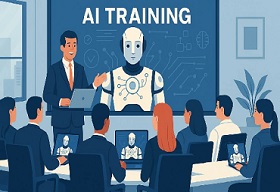
- IIT Madras Pravartak partners with SWAYAM Plus to launch a free AI training programme for K–12 school teachers across India
- 40-hour certification course targets rural educators, focusing on practical and ethical use of AI in classrooms
- First 500 rural teachers to receive fee waivers, aimed at boosting grassroots digital and AI-enabled teaching capacity
The Indian Institute of Technology Madras Pravartak Technologies Foundation has partnered with the Ministry of Education’s SWAYAM Plus platform to launch a free artificial intelligence training programme aimed at rural school teachers across India, in a move designed to strengthen digital and AI-enabled teaching capabilities at the grassroots level.
The initiative, titled AI for Educators- K12 Teachers for Classes I to XII, is a certification course scheduled to commence on February 5, 2026. Registrations for the programme are currently open and will remain available until January 31, 2026. The course is open to school teachers nationwide, with a special focus on educators working in rural and underserved regions.
The 40-hour programme has been designed to help teachers understand, adopt and apply artificial intelligence tools in classroom settings in a practical and responsible manner. The objective is to enable educators to enhance learning outcomes while ensuring that the use of AI remains inclusive, ethical and aligned with educational goals. By the end of the course, teachers are expected to gain the confidence to integrate AI-based tools into both teaching and assessment processes.
According to a statement issued by IIT Madras Pravartak, the curriculum combines foundational concepts with hands-on applications to ensure relevance for real-world classroom environments. The programme includes an introductory session followed by eight structured modules that cover a wide range of contemporary topics.
These include the use of generative AI tools, prompt engineering techniques, gamification and storytelling in education, and AI-supported lesson planning. Teachers will also be introduced to advanced student engagement tools such as augmented reality, virtual reality and data visualisation techniques.
Also Read: AKTU, National Forensic Sciences University Partner on Forensic Education
In addition, the course addresses AI-enabled assessment and evaluation methods, subject-specific AI use cases across disciplines, strategies for inclusive education, and the use of online and blended learning platforms. The focus is on equipping teachers with practical skills that can be immediately applied in classrooms, rather than limiting the training to theoretical understanding.
The programme is expected to help educators design AI-powered teaching resources, improve classroom engagement and personalise learning for students with diverse needs. Teachers completing the training will also be able to employ AI-driven assessment and grading tools, conduct AI-enhanced online classes, and implement inclusive AI strategies to support learners from varied academic and social backgrounds.
A key feature of the initiative is the waiver of certification fees for the first 500 teachers from rural schools who successfully complete the programme. This is intended to reduce financial barriers and encourage participation from educators who may otherwise have limited access to advanced professional development opportunities.
The collaboration between IIT Madras Pravartak and SWAYAM Plus reflects a broader push by the Ministry of Education to expand the reach of technology-enabled learning and teacher training across the country. By leveraging IIT Madras Pravartak’s expertise in deep-tech innovation and SWAYAM Plus’s national digital education platform, the programme aims to bridge the gap between emerging technologies and classroom teaching, particularly in rural and semi-urban areas.
As artificial intelligence increasingly becomes part of everyday life and work, initiatives such as this training programme are seen as crucial in preparing teachers to guide students through a rapidly evolving digital landscape. The course is expected to play a role in building long-term capacity among educators, ensuring that AI adoption in schools supports learning equity, creativity and critical thinking rather than widening existing gaps.