A featured contribution from Leadership Perspectives: a curated forum reserved for leaders nominated by our subscribers and vetted by our editorial board.

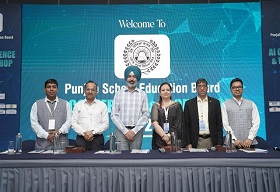
- Punjab School Education Board is introducing Artificial Intelligence as a core part of the school computer science curriculum across Punjab
- Announced at a national AI in education conference, the reform will include AI performance marks on student board certificates to reflect digital competency
- The initiative, supported by education leaders and industry partners like Intel, aims to prepare students for future AI-driven careers and promote ethical, tech-focused learning
Punjab School Education Board is pushing Artificial Intelligence in education into the spotlight with a major reform that could reshape how students learn computer science in schools across Punjab. Under the new plan, AI in school curriculum will not just be an add-on but a core part of learning, with student performance in computer science education now officially reflected on board certificates.
The announcement came during a national-level AI in education conference and workshop hosted by the board, bringing together policymakers, educators, and tech industry leaders to map out how classrooms can evolve in a rapidly changing digital world. The goal is clear: prepare students for a future driven by technology-driven education and global digital skills.
Punjab Education Minister Harjot Singh Bains described the move as a bold step toward education reform in India, emphasizing that integrating AI will improve quality, encourage innovation, and modernize the entire schooling ecosystem. He highlighted that students must be equipped not just to use technology but to thrive in an AI-powered future.
Also Read: Free TNPSC Coaching Classes Begin in Chennai for Aspirants
Adding to this vision, Amarpal Singh confirmed that AI will now be embedded into the syllabus, building on Punjab’s existing compulsory computer science curriculum. He also stressed that AI learning outcomes will formally appear on student certificates, making digital competency a measurable academic milestone.
Education leaders from Central Board of Secondary Education, along with officials from Haryana and Jammu & Kashmir boards, and industry representatives including Intel, participated in discussions on future-ready skills education and workforce readiness. An exhibition at the event showcased AI-driven student projects and education startups, highlighting how innovation is already entering classrooms.
The initiative also focuses on ethical AI education, aiming to shape responsible digital citizens alongside skilled learners. With policy, industry, and academia aligning, Punjab is positioning itself as a front-runner in integrating Artificial Intelligence in school education at scale, signaling a major shift in how Indian students may soon learn, perform, and graduate in a tech-first academic environment.