A featured contribution from Leadership Perspectives: a curated forum reserved for leaders nominated by our subscribers and vetted by our editorial board.

Synopsis
Prime Minister Narendra Modi emphasized blending modern technology with India's traditional knowledge by promoting AI, Sanskrit, and BTech education together. He said this approach can drive innovation, preserve cultural heritage, and equip students with future-ready skills, strengthening India's leadership in technology and knowledge-based development.
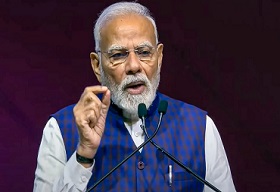
Prime Minister Narendra Modi has emphasized that India’s ancient knowledge traditions are not relics of the past but powerful resources capable of shaping the future of artificial intelligence, data science, and modern education.
Speaking during the latest episode of his Mann Ki Baat radio program, the Prime Minister highlighted two significant developments that reflect the growing integration of traditional Indian knowledge with cutting-edge technology and higher education. He pointed to the launch of a new BTech in AI and Data Science by Central Sanskrit University and the revival of the historic Shastrarth tradition at Nalanda University, calling both initiatives important milestones in India's educational journey.
According to Modi, these initiatives demonstrate how India is successfully blending centuries-old intellectual traditions with the demands of the modern world. He stressed that the country’s rich cultural and academic heritage should not be viewed as a museum artifact but as a living and evolving source of knowledge capable of contributing to technological innovation and global learning.
One of the key examples cited by the Prime Minister was Nalanda University’s decision to revive the ancient practice of Shastrarth as part of its convocation ceremony. Rooted in India’s scholarly traditions, Shastrarth has historically served as a platform for intellectual discussions, philosophical exchanges, and rigorous academic debates. Modi explained that the tradition extends far beyond simply expressing opinions, describing it as a disciplined process built on reasoned arguments, evidence, and thoughtful dialogue.
Also Read: America's Cancer Drug Shortage and India's Moment in Global Pharma
“Nalanda University has revived the ancient Indian tradition of ‘Shastrarth’, which is not merely a medium for expressing one’s views but a disciplined process of dialogue, debate and deep contemplation”, he says. The PM said the practice required participants to articulate their positions 'backed by logic and facts' while also learning to listen to opposing views with patience.
The Prime Minister also noted the growing international appeal of the university, revealing that nearly half of the students participating in the convocation were from countries outside India. He described this as a remarkable example of how India’s educational traditions continue to attract global interest and foster cross-cultural academic engagement. Calling it an effort to bridge 'an ancient tradition with contemporary times', Modi encouraged universities across the country to explore similar initiatives that promote constructive debate, critical thinking, and intellectual openness.
Alongside the revival of Shastrarth, Modi also praised Central Sanskrit University for launching an AICTE-approved BTech in AI and Data Science at its Nashik campus for the 2026-27 academic session. The innovative undergraduate program combines artificial intelligence, data science, Sanskrit, and Indian languages, creating a unique academic model that seeks to merge modern technology with India’s classical linguistic and intellectual heritage.
“This marks a crucial step towards integrating modern technology with India’s traditional knowledge”, Modi says. He explained that the interdisciplinary program has the potential to accelerate the development of advanced AI tools for Indian languages, while also supporting the digitization, preservation, and analysis of ancient manuscripts and historical texts. Such efforts could significantly improve access to India's vast repository of traditional knowledge and make it more accessible for future generations of researchers, scholars, and technology developers.
The Prime Minister’s remarks reflect the government’s broader vision of positioning India as a global leader in both artificial intelligence and cultural preservation. By combining advanced technological education with the country’s timeless intellectual traditions, these initiatives seek to create a new generation of innovators capable of leveraging historical wisdom to solve contemporary challenges, while ensuring that India’s priceless knowledge heritage continues to thrive in the digital era.