A featured contribution from Leadership Perspectives: a curated forum reserved for leaders nominated by our subscribers and vetted by our editorial board.

- Kerala starts ‘Malayalashree’ project to teach Malayalam in oriental schools.
- Students can now study Malayalam alongside Sanskrit and Arabic.
- Public exams for Classes 7 and 10 to begin this academic year.
Kerala has launched a new initiative, the ‘Malayalashree’ project, to give students in oriental schools the chance to learn Malayalam as their mother tongue. The program also allows students to continue learning Sanskrit and Arabic, ensuring a well-rounded education.
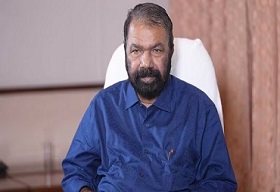
The project was inaugurated by Minister for General Education and Labour, V. Sivankutty, who said that denying children the right to learn their mother tongue was like separating them from their own land and culture. “This initiative ends that long-standing injustice”, he added.
Though the project was first approved by the government in 2011, it was not fully implemented at the time. The current government has now taken steps to bring it to life with determination and planning.
Under the new initiative, students from 38 oriental schools across nine districts will be able to study Malayalam. The syllabus has been prepared by the State Council of Educational Research and Training (SCERT), following equivalency textbooks of the Literacy Mission.
Also Read: IIT Bombay Unveils Generative AI Certificate Program
Public examinations for the current academic year will be held for Class 7 and Class 10 students. Around 2,105 students in Class 7 and 2,445 students in Class 10 are expected to appear. The Class 7 exam will be conducted by the Literacy Mission, while the Class 10 exam will be overseen by Pareeksha Bhavan.
With ‘Malayalashree,’ Kerala aims to strengthen students’ connection with their language and culture, while maintaining academic standards in oriental education.