
Karnataka Plans English Sections in All Government Schools
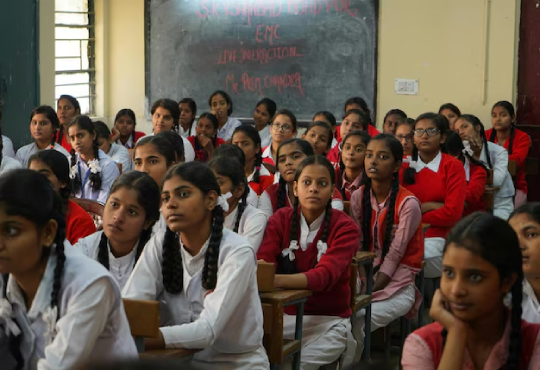
Karnataka is planning to introduce English-medium sections across all 48,527 government schools from the 2027-28 academic year, expanding its bilingual education initiative across the state. The move aims to address growing parental demand for English-medium education while strengthening the appeal of government schools.
School Education and Literacy Minister Madhu Bangarappa announced the proposed statewide expansion, explaining that the government wants to make bilingual education accessible to students across Karnataka. The initiative will allow students to receive instruction in English and Kannada, giving parents greater choice over their children's education.
The proposal also comes amid concerns about students moving from government institutions to private schools because of the increasing preference for English-medium instruction.
Karnataka Expands Its Bilingual Education Initiative
The bilingual school programme was initially introduced during the 2019-20 academic year under the government led by former Chief Minister H.D. Kumaraswamy. Since then, English-medium sections have gradually been introduced in government schools.
According to the reported figures, 6,539 schools had already introduced English-medium sections. Around 2,000 additional government schools received permission to open such sections during 2024-25, followed by another 4,134 schools in 2025-26.
The first batch of students enrolled under the initiative has now reached Class 7, indicating the programme's gradual expansion.
The latest proposal aims to extend English-medium learning opportunities across the wider government school network rather than limiting the initiative to selected institutions.
Teacher Training to Support the Expansion
Speaking at a meeting on CSR partnerships in Karnataka's education system, Madhu Bangarappa highlighted the government's commitment to introducing bilingual classes across state-run schools.
"Therefore, bilingual classes will be implemented in all government schools across the State from the next academic year," said Madhu Bangarappa, Karnataka's Minister for School Education and Literacy.
He also explained that teachers require specific training to conduct bilingual classes effectively. The government has initiated steps to recruit approximately 10,000 teachers, who will receive training along with existing teaching staff.
The preparation of teachers is particularly important because teaching academic subjects in English requires more than basic language proficiency. Educators must be able to explain concepts clearly, communicate with students and maintain learning quality across different classrooms.
Rising Demand for English-Medium Education
The growing preference for English-medium schooling has encouraged more parents to seek institutions that offer stronger English-language exposure. Families increasingly view English proficiency as an important skill for higher education, professional communication and future employment.
In Bengaluru, 1,103 of the 1,465 government schools in the North and South educational divisions have reportedly received permission to introduce English-medium sections.
The demand was also reflected in applications from 11,555 prospective schools across 33 educational districts during the previous selection process.
What the Expansion Means for Government Schools
Karnataka's proposed expansion represents an important development in public education, particularly as government schools respond to changing parental expectations.
However, the success of the initiative will depend on teacher recruitment, language training, classroom resources and consistent implementation. Education experts have also emphasised the need to assess existing bilingual schools before extending the programme statewide.
By combining English and Kannada instruction, Karnataka aims to widen educational choices while retaining the role of regional-language learning in public schools. The coming academic year will be important in determining how effectively the state can translate this plan into classroom practice.