A featured contribution from Leadership Perspectives: a curated forum reserved for leaders nominated by our subscribers and vetted by our editorial board.

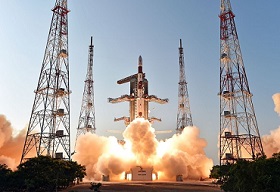
- ISRO has opened a fresh round of proposals for accessing data from the Aditya-L1 mission to boost solar research
- The opportunity is open to Indian scientists and researchers in solar science from institutes, universities, and colleges across the country
- Selected proposals will receive observation time between July and September for conducting detailed solar studies
The Indian Space Research Organisation (ISRO) has invited proposals from researchers across India to access data from its Aditya-L1 mission, the country’s first space-based solar observatory. This marks the second formal call, following an earlier announcement made in January.
ISRO said over 27 terabytes of mission data are already available in the public domain, with several findings published in international peer-reviewed journals. The new call aims to expand research and maximize scientific output from the mission.
The opportunity is open to scientists and researchers working in Indian institutes, universities, and colleges. Applicants must be actively involved in solar science research and capable of submitting proposals with strong scientific and technical justification as principal investigators.
Selected proposals will get observation time between July and September as part of this cycle.
Launched in September 2023, Aditya-L1 reached its designated halo orbit around the Lagrangian point L1 in January 2024. Located about 1.5 million kilometers from Earth, this position allows continuous observation of the Sun without interruptions like eclipses.
Also Read: Samsung R&D India Adds 6 Colleges to Innovation Campus, Total 15
The mission carries seven scientific payloads. Four of them focus on remote sensing to study different layers of the Sun, including the photosphere, chromosphere, and corona. The remaining three are in-situ instruments that measure particles and magnetic fields in space around L1.
Through this initiative, ISRO aims to encourage wider participation from India’s scientific community and deepen understanding of solar activity and space weather.