A featured contribution from Leadership Perspectives: a curated forum reserved for leaders nominated by our subscribers and vetted by our editorial board.

Synopsis
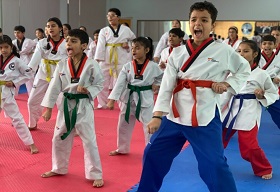
India and South Korea have launched an elite Taekwondo training program across 25 schools in India to promote sports excellence and cultural exchange. The initiative aims to identify young talent, provide professional coaching, and strengthen bilateral sports cooperation. Program includes Korean coaches, curriculum, and student training.
Following the outcomes of the Korea-India Bilateral Summit, where both nations reaffirmed their commitment to strengthening cultural diplomacy and expanding sports-based cooperation, a new education-focused initiative is now taking shape in India’s school ecosystem. The recently signed Joint Statement emphasized deeper people-to-people exchanges, and that vision is now being translated into a structured grassroots program that directly engages schoolchildren through physical education and cultural learning.
In a major development aligned with this diplomatic direction, the Korean Cultural Centre India (KCCI), working in close collaboration with the India branch of Kukkiwon, has officially announced the launch of the 2026 Elite After-School Taekwondo Education Program. Designed as a flagship cultural and sports education initiative, the program is set to reach nearly 2,600 students across 25 carefully selected schools in India, marking one of the most structured efforts yet to integrate Korean martial arts into Indian after-school learning systems.
Unlike earlier initiatives that focused primarily on expanding participation numbers, this year’s program emphasizes quality-driven after-school education reform. The selection of participating schools was conducted with a focus on institutions demonstrating strong commitment to adopting Taekwondo as part of their extracurricular curriculum. The aim is to transform after-school hours into a premium character-building and physical development platform, where students are encouraged to grow not only in athletic ability but also in discipline, emotional resilience, and global awareness.
Also Read: SAIL Signs Education Tie-Up with MDI Gurgaon for Leadership Development
The initiative reflects a broader diplomatic effort to operationalize the commitments made during the Korea-India Bilateral Summit, particularly the shared goal of fostering friendship through sports. By embedding Taekwondo training into daily school routines, the program turns abstract diplomatic agreements into lived experiences for Indian youth. Students participate in weekly training sessions after regular classes, where they practice traditional techniques while also learning the philosophical foundations of Taekwondo, including respect, perseverance, humility, and self-control.
Educators involved in the program have welcomed the initiative, describing it as a valuable addition to India’s evolving education landscape. In schools where academic pressure is often intense, the introduction of structured martial arts training has been seen as a meaningful tool for stress management, emotional stability, and holistic development. Teachers have also noted that the program encourages teamwork and self-confidence, helping students build life skills that extend beyond the classroom.
According to Hwang Il Yong, Director of Korean Cultural Centre India, Taekwondo recognized globally as both Korea’s national martial art and an Olympic sport serves as a powerful bridge between cultures. He emphasized that the program is expected to further strengthen bilateral friendship and expand youth engagement between India and Korea through sustained cultural exchange and education-based collaboration.
As the 2026 Elite After-School Taekwondo Education Program rolls out across key urban centers including New Delhi and other major regions, it stands as a tangible example of how international agreements can influence everyday learning environments. More than just a sports initiative, it represents a growing model of education diplomacy where Taekwondo training in India, Korean cultural exchange programs, and India-Korea youth cooperation converge to shape the next generation of globally minded students.