A featured contribution from Leadership Perspectives: a curated forum reserved for leaders nominated by our subscribers and vetted by our editorial board.

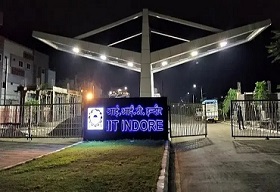
- IIT Indore promotes Hindi as a working language in STEM, aiming to improve understanding and access to scientific education
- Abhyuday-3 seminar highlights the use of technical Hindi in higher education, research, and science communication
- The institute introduces Hindi lectures and research work, including first-year classes, classroom discussions, and Hindi research abstracts
The Indian Institute of Technology, Indore (IIT Indore) is taking steps to make Hindi a functional language in science and technology education, aiming to improve understanding and make technical knowledge more accessible to a wider group of students.
The effort is being led through Abhyuday-3, a two-day National Technical Hindi Seminar that began on January 5 at the IIT Indore campus. The event is being jointly organized by IIT Indore, IIT Jodhpur, and the CSIR-National Institute of Science Communication and Policy Research. The seminar focuses on strengthening the use of Hindi in higher education, research, and scientific communication.
At IIT Indore, the initiative is already taking shape on campus. Some first-year classes are now taught in Hindi, while research abstracts are being prepared following official language guidelines. Faculty members are also encouraging students to use Hindi during classroom discussions to explain complex scientific ideas more clearly.
Suhas Joshi, Director of IIT Indore said the move aligns with the national vision of connecting science and knowledge with Indian languages. He added that strengthening technical Hindi can help spread knowledge more widely and support India’s linguistic diversity.
Faculty members noted that the goal is not to replace English but to reduce language barriers in technical education. The focus is on improving conceptual clarity, especially for students from Hindi-medium backgrounds, who often struggle with complex subjects due to language limitations.
Also Read: AKTU, National Forensic Sciences University Partner on Forensic Education
One of the major outcomes of the seminar was the release of 'Smarika', a collection of 26 peer-reviewed research papers written in Hindi. These papers were presented in two technical sessions covering science and engineering and digital technology and innovation.
Through this initiative, IIT Indore aims to make science education more inclusive and easier to understand without compromising academic quality.