A featured contribution from Leadership Perspectives: a curated forum reserved for leaders nominated by our subscribers and vetted by our editorial board.

The University of Delhi (DU) has directed its colleges, departments and hostels to strengthen women’s safety by improving campus lighting, reviewing CCTV surveillance and identifying security gaps. The university has asked the authorities concerned to submit detailed reports outlining safety concerns and urgent infrastructure requirements by 5 p.m. on 12 October 2026.
The directions were issued following an online meeting convened by the university’s Proctor on 9 October. The meeting brought together college principals, deans, directors, heads of departments, hostel provosts, wardens and resident tutors to discuss safety across university campuses, academic departments, faculty areas and residential facilities.
Campus Lighting and CCTV Surveillance
As part of the safety assessment, college and hostel authorities have been instructed to identify poorly illuminated areas, security blind spots and locations where visibility is obstructed. Non-functional lights must be repaired, additional streetlights installed where necessary, and CCTV cameras strategically positioned to improve surveillance.
Officials have also been asked to prune overgrown trees and vegetation that block light or obstruct visibility along campus pathways. These measures aim to improve the visibility of public spaces and help reduce potential safety risks for students, particularly women travelling through campus areas.
The university has also instructed college and hostel authorities to coordinate with its Engineering Department to inspect buildings and identify structural issues requiring urgent repairs.
Verified Statement from the University Proctor
Explaining the purpose of collecting safety assessments, the university’s Proctor said the information would help identify areas requiring improvement and support coordinated action by the authorities.
“The objective is to first collect data on where what can be improved, so we can give the report to the LG and CM, and accordingly action for campus and women safety can be taken.” — Professor Manoj Kumar Singh, Proctor, University of Delhi.
The statement was reported by Press Trust of India (PTI) on 9 October 2026. The university has asked relevant authorities to submit detailed lists of women’s safety and infrastructure concerns in hard-copy or digital format by the specified deadline.
Self-Defence Training and Emergency Support
Beyond infrastructure improvements, the university plans to organise gender-sensitisation workshops and a seven-day self-defence course for students in coordination with the Delhi Police. The initiatives are intended to complement security measures by improving awareness and preparedness.
The university has also directed institutions to display women’s safety helpline numbers 1091 and 112 prominently across college and campus premises so students can access assistance when required.
The meeting also discussed increasing police presence near colleges and hostels, deploying dedicated surveillance teams, installing additional pink booths for women and improving the functioning of the Vamika police van, which supports rapid response.
Implementation and Accountability
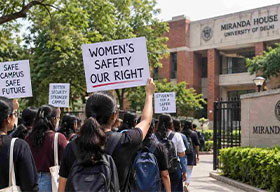
The latest directions follow student protests calling for stronger security arrangements and safer public spaces around Delhi University institutions. The university’s assessment process is intended to identify specific problems at individual campuses and help authorities determine where improvements are most urgently needed.
The next step is for institutions to submit their reports within the stipulated deadline. The findings can help the university identify infrastructure deficiencies, coordinate repairs and assess additional security requirements.
Effective implementation will depend on timely action, regular monitoring and cooperation between educational institutions and law enforcement agencies. Addressing both physical security gaps and student awareness remains important to creating a safer campus environment.