A featured contribution from Leadership Perspectives: a curated forum reserved for leaders nominated by our subscribers and vetted by our editorial board.

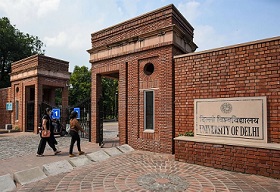
- Delhi University to introduce ‘Linguistic Anthropology’ as a new elective for master’s students.
- The course will explore the role of language in understanding society, including classical languages like Sanskrit.
- The move aligns with PG curriculum reforms and the National Education Policy 2020, strengthening the anthropology syllabus.
Delhi University’s Department of Anthropology is set to propose a new elective paper titled ‘Linguistic Anthropology’ for second-year master’s students under the postgraduate curriculum framework, 2024. The proposed paper, designed for four credits, will first be reviewed by the Standing Committee for Academic Affairs and, once approved, will move to the Academic Council and Executive Council for final inclusion in the syllabus.
Professor Dannarapu Venkata Prasad said the elective is intended to be introduced initially as an optional paper, with plans to eventually make it a core subject. The syllabus is structured into four units covering Introduction to Linguistic Anthropology, Social Context of Language Use, Structure of Linguistic Forms, and Sanskrit as an Ancient Indian Language.
Department Head Soumendra Mohan Patnaik emphasized the significance of the new paper, noting that linguistic anthropology has long been underrepresented in Indian universities. “To understand social structures such as marriage, kinship, and politics, it is essential to study language as the foundation of society”, he explained. The new course will explore how language shapes human experience, including mother tongues and classical languages like Sanskrit, Pali, and Tamil, linking with the Indian Knowledge System.
Also Read: CISCE Cancels ICSE and ISC Exams in UAE, Impacting Indian Students
The introduction of this elective is made possible through curriculum reforms under the Postgraduate Curriculum Framework (PGCF) and the National Education Policy (NEP 2020). Faculty believe it will give students a more holistic understanding of society, completing the four key branches of anthropology: cultural, biological, linguistic, and prehistoric.
With this addition, Delhi University aims to offer students innovative learning opportunities while bridging traditional knowledge with modern anthropological study.