A featured contribution from Leadership Perspectives: a curated forum reserved for leaders nominated by our subscribers and vetted by our editorial board.

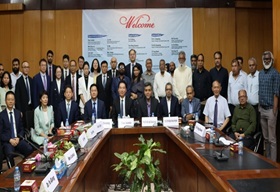
Bangladesh Medical University (BMU) has taken a decisive step toward transforming its medical education and clinical capabilities through deeper collaboration with China. In a high-level bilateral meeting held on 27 September 2026 at Shaheed Dr Milton Hall, BMU leadership and a senior Chinese delegation from the Yunnan Provincial Government and Kunming Medical University outlined an ambitious roadmap focused on medical education, cutting-edge research, advanced training, modern technology and specialised healthcare services.
The discussions placed particular emphasis on introducing robotic surgery at BMU a move that could significantly elevate the standard of complex surgical care available in Bangladesh. Zhao Junmin, a member of the Standing Committee of the Communist Party of Yunnan Province, underscored the enduring friendship between China and Bangladesh and expressed strong commitment to expanding cooperation in healthcare delivery, medical education, research, doctor training and the transfer of modern medical technologies. His presence signalled the strategic importance Beijing and provincial authorities attach to health diplomacy with Bangladesh.
Kunming Medical University Vice-President Dr Yu Qiang reaffirmed the value of the existing memorandum of understanding between the two institutions. He described the MoU as a robust foundation for sustained academic and institutional partnership, including structured teacher and student exchange programmes. These exchanges are expected to create continuous channels for knowledge transfer, joint curriculum development and shared clinical exposure.
Bangladesh Medical University Acting Vice-Chancellor Prof Dr Md Abul Kalam Azad welcomed the Chinese delegation and highlighted the transformative potential of closer engagement with Chinese medical institutions. He emphasised that systematic collaboration can accelerate the modernisation of medical education in Bangladesh, strengthen research output and expand access to specialised treatments that currently remain limited. The Acting Vice-Chancellor positioned the partnership as an opportunity to align BMU with global standards in high-precision surgery, transplantation and technology-driven healthcare.
Key areas of cooperation identified during the meeting include the introduction of robotic surgery systems, advancement of kidney transplantation programmes, comprehensive physician training, collaborative research projects and the development of specialised clinical services. Robotic surgery, in particular, represents a major leap. The technology enables greater surgical precision, smaller incisions, reduced blood loss and faster patient recovery outcomes that can directly improve quality of care and reduce the burden on the healthcare system.
Kidney transplantation was another priority. Expanding capacity in this critical field requires not only advanced facilities but also continuous training of multidisciplinary teams. Joint programmes with Chinese counterparts experienced in high-volume transplant centres can accelerate skill development and improve long-term patient outcomes. Physician training initiatives and joint research were recognised as essential pillars that will sustain progress beyond individual projects.
Following the formal discussions, the Chinese delegation visited BMU’s outpatient department. The visit provided practical insight into the university’s current clinical operations and patient flow, enabling both sides to identify realistic entry points for technology transfer, training modules and collaborative service models.
The significance of this engagement extends beyond institutional agreements. Stronger medical ties between Bangladesh and China contribute to broader health system resilience, human capital development and people-to-people connectivity. For BMU, the partnership offers a pathway to integrate advanced technologies, elevate research standards and expand specialised services that serve patients across the country. For Chinese institutions, it creates opportunities for meaningful academic exchange and regional health cooperation in South Asia.
Successful implementation will depend on clear action plans, dedicated coordination mechanisms and phased rollout of priority programmes. Immediate next steps could include detailed feasibility studies for robotic surgery infrastructure, short- and medium-term training fellowships for BMU faculty and surgeons, joint research proposals and expanded student-faculty mobility under the existing MoU. Regular progress reviews and measurable targets will help convert high-level commitments into tangible results.
This collaboration also aligns with the wider trajectory of China-Bangladesh relations, where health and education have emerged as practical domains of mutual benefit. By focusing on medical education, research excellence, technology adoption and specialised care, BMU and its Chinese partners are laying the groundwork for a partnership that can deliver lasting impact improved clinical outcomes, better-trained professionals and a stronger institutional foundation for the future of healthcare in Bangladesh.
Also Read: 10 Most Promising Language Institutes in India – 2019
The meeting at BMU marks more than a diplomatic exchange. It represents a concrete commitment to raising the quality of medical education and patient care through international collaboration. As both sides move from discussion to implementation, the emphasis on robotic surgery, transplantation, physician training and research positions BMU to play a leading role in modernising specialised healthcare while strengthening the strategic health partnership between Bangladesh and China.