
Marcos Quay Sports: Building a Sporting Culture from the School Ground Up

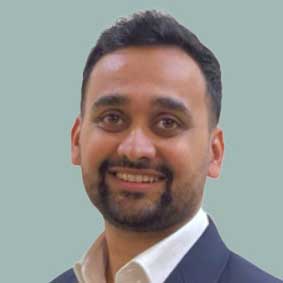
Raahil Dhruva
Director
Marcos Quay Sports is building its proposition around precisely this idea. Working with schools to develop structured sports education ecosystems, the company goes beyond supplying coaches to integrate curriculum design, multi-sport programmes, student assessments, competitions, sports days, inter-school participation and after-school programmes. Its larger ambition is to contribute towards transforming India from a nation that predominantly watches sport into one that actively plays it.
At the heart of Marcos Quay’s philosophy is a simple conviction: sporting culture cannot be built only by identifying elite athletes. It must begin by giving millions of children regular access to quality sporting experiences. The company’s leadership is consequently focused on creating systems in which beginners, recreational participants and students with competitive potential can all find meaningful opportunities to play and progress.
Building Sport around the Child
Marcos Quay does not approach school sports through a standardised, one-size-fits-all model. Instead, programmes are structured around the student’s age, physical development, existing ability and interests, while also considering the objectives and environment of the individual school.
For younger children, this means creating an enjoyable introduction to movement and fundamental physical skills. As students advance, the programme progressively incorporates technical development, sport-specific learning and competitive opportunities. Assessments and participation data further help establish where students are starting and how their capabilities evolve over time.
This approach reflects an important distinction in Marcos Quay’s philosophy. Participation cannot be restricted to students who are naturally inclined towards sport or already demonstrate competitive ability. A strong school sports programme must
create room for every child to participate at an appropriate level while providing clearer progression opportunities for those who wish to pursue sport more seriously.
Managing the Entire Sports Ecosystem
While many schools recognise the importance of sport, managing a comprehensive sports function requires specialist expertise and considerable operational bandwidth. Challenges can range from curriculum design and coach recruitment to consistency in delivery, infrastructure utilisation, student participation and access to meaningful competitions.
A school may have strong sporting infrastructure without a structured curriculum, while another may employ capable coaches but lack common assessment standards or programme coordination. Marcos Quay addresses these fragmented requirements by functioning as a single strategic partner responsible for bringing the different components together.
This is also what differentiates its model from simply placing coaches within schools. Hiring coaches still leaves the institution responsible for deciding what should be taught, coordinating different sports, assessing student development, managing competitions and determining how the programme should evolve.
“Marcos Quay instead brings curriculum, coaches, processes, assessments, competitions and programme management within a connected framework. The starting question therefore shifts from how many coaches a school requires to what sporting outcomes it wants to create for its students”, says Raahil Dhruva, Director, Marcos Quay.
Making Sports Part of School Life
Operating within an educational institution also requires sports programmes to work alongside, rather than compete with, academics. Marcos Quay engages with school leadership to understand timetables, academic calendars, student demographics, infrastructure and broader institutional priorities before designing the programme.
Partnerships consequently begin with an assessment of the school’s existing sports ecosystem and its gaps. The company then develops an appropriate programme deploys coaches and systems and continues reviewing participation and outcomes after implementation.
Measurement forms an important part of this process. Rather than judging success by the number of coaching sessions conducted, Marcos Quay tracks areas such as participation, consistency, student engagement, physical development, skill progression and competitive involvement. Baseline assessments can also be used to monitor development over time, while participation in events and inter-school competitions provides additional indicators of engagement.
Scaling Access beyond the Major Cities
Marcos Quay’s model has already expanded across more than 40 schools, reaching over 60,000 students across 14 cities, supported by more than 210 full-time coaches on its payroll. Behind these numbers is an increasingly developed operating system spanning curriculum, coaching, assessments, competitions and school engagement.
“The company’s next phase is centred on taking this model to substantially more schools, with particular emphasis on smaller towns and villages where structured sporting opportunities are often less readily available. As it expands, the focus will remain on increasing participation, strengthening the quality of sports education and building clearer pathways from recreational participation towards competitive sport”, shares Raahil Dhruva.
For Marcos Quay, the larger opportunity is therefore not defined by producing a small number of exceptional athletes. It begins much earlier, with millions of schoolchildren developing the habit of playing. By helping schools make sport more structured, accessible and measurable, the company aims to ensure that sport becomes not an occasional extracurricular pursuit, but a natural part of growing up and learning in India.
Managing the Entire Sports Ecosystem
While many schools recognise the importance of sport, managing a comprehensive sports function requires specialist expertise and considerable operational bandwidth. Challenges can range from curriculum design and coach recruitment to consistency in delivery, infrastructure utilisation, student participation and access to meaningful competitions.
At the heart of Marcos Quay’s philosophy is a simple conviction: sporting culture cannot be built only by identifying elite athletes
A school may have strong sporting infrastructure without a structured curriculum, while another may employ capable coaches but lack common assessment standards or programme coordination. Marcos Quay addresses these fragmented requirements by functioning as a single strategic partner responsible for bringing the different components together.
This is also what differentiates its model from simply placing coaches within schools. Hiring coaches still leaves the institution responsible for deciding what should be taught, coordinating different sports, assessing student development, managing competitions and determining how the programme should evolve.
“Marcos Quay instead brings curriculum, coaches, processes, assessments, competitions and programme management within a connected framework. The starting question therefore shifts from how many coaches a school requires to what sporting outcomes it wants to create for its students”, says Raahil Dhruva, Director, Marcos Quay.
Making Sports Part of School Life
Operating within an educational institution also requires sports programmes to work alongside, rather than compete with, academics. Marcos Quay engages with school leadership to understand timetables, academic calendars, student demographics, infrastructure and broader institutional priorities before designing the programme.
Partnerships consequently begin with an assessment of the school’s existing sports ecosystem and its gaps. The company then develops an appropriate programme deploys coaches and systems and continues reviewing participation and outcomes after implementation.
Measurement forms an important part of this process. Rather than judging success by the number of coaching sessions conducted, Marcos Quay tracks areas such as participation, consistency, student engagement, physical development, skill progression and competitive involvement. Baseline assessments can also be used to monitor development over time, while participation in events and inter-school competitions provides additional indicators of engagement.
Scaling Access beyond the Major Cities
Marcos Quay’s model has already expanded across more than 40 schools, reaching over 60,000 students across 14 cities, supported by more than 210 full-time coaches on its payroll. Behind these numbers is an increasingly developed operating system spanning curriculum, coaching, assessments, competitions and school engagement.
“The company’s next phase is centred on taking this model to substantially more schools, with particular emphasis on smaller towns and villages where structured sporting opportunities are often less readily available. As it expands, the focus will remain on increasing participation, strengthening the quality of sports education and building clearer pathways from recreational participation towards competitive sport”, shares Raahil Dhruva.
For Marcos Quay, the larger opportunity is therefore not defined by producing a small number of exceptional athletes. It begins much earlier, with millions of schoolchildren developing the habit of playing. By helping schools make sport more structured, accessible and measurable, the company aims to ensure that sport becomes not an occasional extracurricular pursuit, but a natural part of growing up and learning in India.