
.png)


Sunil Rane
Founder & Chancellor
Employers today seek graduates who possess not only academic knowledge but also practical experience, problem-solving capabilities, techno -logical proficiency, and global perspectives. As a result, higher education institutions are redefining their role by integrating experiential learning, research-driven education, industry collaboration, and future-focused curricula into the student experience.
Within this evolving ecosystem, institutions with a strong academic legacy and a clear vision for the future are emerging as catalysts for change. Atharva University, Mumbai, represents one such institution. Established as a university in 2025 after more than 27 years of academic excellence through the Atharva Group of Institutes, it has evolved into a multidisciplinary university that combines academic rigour with industry relevance, research excellence, technological innovation, and holistic student development. Built on the belief that education should transform individuals as well as society, Atharva University continues to strengthen its position as one of Mumbai’s most progressive centres of higher learning.
A Legacy Built on Vision and Purpose
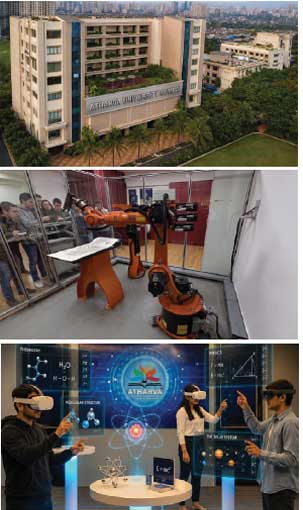
The foundation of Atharva University traces back to 1998, when Hon. Shri Sunil Rane established the Atharva Group of Institutes with a vision of making quality education accessible while preparing students to become ethical professionals and responsible citizens. Located on a six acre green campus in Malad West, Mumbai, the institution was designed as an integrated educational ecosystem where academic excellence, innovation, creativity, and character development could flourish together.
Over the years, the institution expanded into a multidisciplinary academic community comprising engineering, management, hospitality, fashion, media, and creative arts education. Every institution within the Atharva ecosystem was established to address emerging industry requirements while maintaining a strong emphasis on practical learning and professional excellence.
Its journey has been marked by several notable milestones. Atharva College of Engineering earned recognition among India’s leading private engineering colleges, while Atharva College of Hotel Management achieved an impressive placement record with leading luxury hospitality brands. Atharva Institute of Management Studies received recognition for its industry engagement, and the university established Maharashtra’s first industrial robotics training centre within an engineering college.
“Innovation has remained central to Atharva’s identity. Collaborations with IIT Bombay led to the establishment of the Atharva Satellite Ground Station, which became a receiving station for PRATHAM, IIT Bombay’s first student satellite launched by ISRO. Initiatives such as the E-Yantra Cell, advanced robotics facilities, and one of India’s early iMac application development laboratories further strengthened the institution’s reputation as an innovation-driven campus”, shares Dr. Pravin Nemade, Director- Planning & Implementation, Atharva University.
Beyond academics, the Atharva Foundation has consistently demonstrated the university’s commitment to social responsibility through initiatives supporting education, women empowerment, rural communities, and the families of defence personnel, reinforcing the belief that education must contribute meaningfully to society.
Creating Industry-Ready Graduates Through Experiential Learning
Atharva University’s academic philosophy is built around preparing students for real-world challenges rather than examinations alone. The university’s multidisciplinary curriculum aligns with NEP 2020 while integrating Outcome-Based Education, project-based learning, research exposure, and industry engagement across programmes.
One of its distinctive initiatives is the concept of Project Fridays, where students dedicate time every week to applying classroom concepts through live projects, innovation challenges, simulations, case studies, and collaborative problem-solving. This experiential learning model bridges the gap between theory and professional practice while nurturing creativity and critical thinking.
Industry integration begins early through structured internships, corporate assignments, guest lectures, mentorship programmes, and continuous engagement with leading organisations. Students benefit from strong recruiter relationships developed over nearly three decades, ensuring that classroom learning remains aligned with evolving industry expectations.
Equally important is the university’s emphasis on developing leadership, communication, teamwork, entrepreneurial thinking, and professional ethics. This holistic approach ensures graduates are
equipped not only with technical expertise but also with the adapt ability and confidence required in today’s dynamic global workplace.
Innovation, Research, and Technology at the Core
Innovation is deeply embedded within Atharva University’s academic ecosystem. Its campus combines modern infrastructure with advanced laboratories and specialised centres designed to encourage research, experimentation, and interdisciplinary collaboration.
Students have access to Artificial Intelligence and Machine Learning laboratories, Cyber Security Lab, AR VR Simulation Lab, IoT Development Center, Robotics Center, Innovation Lab (ILab), multimedia production facilities, iMac laboratories, and smart classrooms supported by digital learning platforms. These facilities provide handson exposure to emerging technologies that are reshaping industries worldwide.
Research collaborations with industry, academic institutions, and government agencies further strengthen this ecosystem, creating opportunities for multidisciplinary innovation while contributing to India’s growing knowledge economy.
A Multidisciplinary University with a Global Outlook
As Atharva University enters its next phase of growth, it is expanding beyond conventional academic boundaries to create a globally connected learning environment. The university offers undergraduate, post graduate, and doctoral programmes across diverse disciplines while promoting interdisciplinary education and academic flexibility in line with NEP 2020.
International collaborations, faculty interactions, student exchange opportunities, global mentorship programmes, and exposure to inter national best practices help broaden students’ academic and professional perspectives. At the same time, strong corporate partnerships ensure graduates remain aligned with evolving workforce requirements across sectors.
The university’s emphasis on entrepreneurship further distinguishes its educational model. Students are encouraged to participate in innovation competitions, startup programmes, product development initiatives and business incubation activities that foster independent thinking and enterprise creation.
Its technology-enabled campus complements this academic ecosystem through digital libraries, advanced learning management systems, collaborative workspaces, sports facilities, creative studios, recreational infrastructure, and modern student amenities that contribute to a well rounded educational experience.
A Bold Vision for the Future
Atharva University’s transformation from a respected educational group into a multidisciplinary university represents not the culmination of its journey, but the beginning of a far more ambitious chapter.
Its long-term roadmap focuses on expanding academic offerings through new schools dedicated to law, health sciences, sustainability, artificial intelligence, and defence technology. The university also plans to establish advanced research centres while significantly increasing research output and patent generation over the coming years.
Future investments include AI-enabled learning platforms, expanded digital infrastructure, next-generation research facilities, international partnerships, and the development of a second innovation-focused campus dedicated to research and industry collaboration. “The university also aims to strengthen its startup ecosystem by supporting more than 100 student-led ventures through incubation, mentorship, funding opportunities, and accelerator programmes”, adds Dr. Pravin Nemade.
Sustainability remains another important pillar of its future strategy. Green campus initiatives, renewable energy integration, water conservation, environmental education, and community engagement programmes reflect the institution’s commitment to creating socially responsible graduates capable of addressing global challenges.
Alongside these initiatives, Atharva continues to champion inclusivity through programmes such as the Martyr’s Daughter Full Scholarship, reinforcing its belief that education should create opportunities while contributing to nation-building.
From its beginnings in 1998 to its emergence as Atharva University, the institution has consistently evolved while remaining true to its founding philosophy of delivering education that is purposeful, industry-relevant, and socially responsible.
By combining academic excellence with experiential learning, technological innovation, research, entrepreneurship, and global engagement, Atharva University is preparing students not merely for successful careers, but for meaningful leadership in an increasingly interconnected world.
As it enters its next phase of growth, the university stands ready to shape a new generation of innovators, professionals, entrepreneurs, and change makers who will contribute to India’s progress and the global knowledge economy.
Innovation, Research, and Technology at the Core
Innovation is deeply embedded within Atharva University’s academic ecosystem. Its campus combines modern infrastructure with advanced laboratories and specialised centres designed to encourage research, experimentation, and interdisciplinary collaboration.
Students have access to Artificial Intelligence and Machine Learning laboratories, Cyber Security Lab, AR VR Simulation Lab, IoT Development Center, Robotics Center, Innovation Lab (ILab), multimedia production facilities, iMac laboratories, and smart classrooms supported by digital learning platforms. These facilities provide handson exposure to emerging technologies that are reshaping industries worldwide.
Atharva University Mumbai’s journey from a respected educational group to a multi disciplinary, futuristic university is more than an institutional milestone - it is a commitment to redefining higher education through research, technology, and innovation, while striving for global excellence
Research collaborations with industry, academic institutions, and government agencies further strengthen this ecosystem, creating opportunities for multidisciplinary innovation while contributing to India’s growing knowledge economy.
A Multidisciplinary University with a Global Outlook
As Atharva University enters its next phase of growth, it is expanding beyond conventional academic boundaries to create a globally connected learning environment. The university offers undergraduate, post graduate, and doctoral programmes across diverse disciplines while promoting interdisciplinary education and academic flexibility in line with NEP 2020.
International collaborations, faculty interactions, student exchange opportunities, global mentorship programmes, and exposure to inter national best practices help broaden students’ academic and professional perspectives. At the same time, strong corporate partnerships ensure graduates remain aligned with evolving workforce requirements across sectors.
The university’s emphasis on entrepreneurship further distinguishes its educational model. Students are encouraged to participate in innovation competitions, startup programmes, product development initiatives and business incubation activities that foster independent thinking and enterprise creation.
Its technology-enabled campus complements this academic ecosystem through digital libraries, advanced learning management systems, collaborative workspaces, sports facilities, creative studios, recreational infrastructure, and modern student amenities that contribute to a well rounded educational experience.
A Bold Vision for the Future
Atharva University’s transformation from a respected educational group into a multidisciplinary university represents not the culmination of its journey, but the beginning of a far more ambitious chapter.
Its long-term roadmap focuses on expanding academic offerings through new schools dedicated to law, health sciences, sustainability, artificial intelligence, and defence technology. The university also plans to establish advanced research centres while significantly increasing research output and patent generation over the coming years.
Future investments include AI-enabled learning platforms, expanded digital infrastructure, next-generation research facilities, international partnerships, and the development of a second innovation-focused campus dedicated to research and industry collaboration. “The university also aims to strengthen its startup ecosystem by supporting more than 100 student-led ventures through incubation, mentorship, funding opportunities, and accelerator programmes”, adds Dr. Pravin Nemade.
Sustainability remains another important pillar of its future strategy. Green campus initiatives, renewable energy integration, water conservation, environmental education, and community engagement programmes reflect the institution’s commitment to creating socially responsible graduates capable of addressing global challenges.
Alongside these initiatives, Atharva continues to champion inclusivity through programmes such as the Martyr’s Daughter Full Scholarship, reinforcing its belief that education should create opportunities while contributing to nation-building.
From its beginnings in 1998 to its emergence as Atharva University, the institution has consistently evolved while remaining true to its founding philosophy of delivering education that is purposeful, industry-relevant, and socially responsible.
By combining academic excellence with experiential learning, technological innovation, research, entrepreneurship, and global engagement, Atharva University is preparing students not merely for successful careers, but for meaningful leadership in an increasingly interconnected world.
As it enters its next phase of growth, the university stands ready to shape a new generation of innovators, professionals, entrepreneurs, and change makers who will contribute to India’s progress and the global knowledge economy.