A featured contribution from Leadership Perspectives: a curated forum reserved for leaders nominated by our subscribers and vetted by our editorial board.

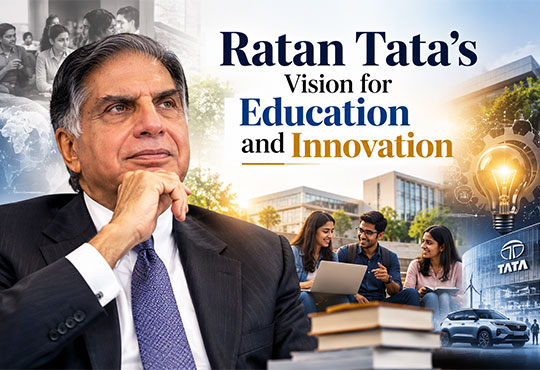
On October 9, 2026, India remembers Ratan Naval Tata on the second anniversary of his passing. The former chairman of Tata Sons, who died on October 9, 2024, at the age of 86, left behind a legacy that extended far beyond business leadership. His contributions to philanthropy, education, scientific research and innovation continue to influence institutions, entrepreneurs and young people. Through his leadership and support for social initiatives, Ratan Tata demonstrated how business success could be connected with a broader responsibility towards society.
His journey, from an architecture student at Cornell University to the leader of one of India's most recognised business groups, offers valuable lessons in learning, perseverance, innovation and purpose.
Early Life and Education
 Born on December 28, 1937, in Bombay, now Mumbai, Ratan Tata was the son of Naval Tata and Soonoo Tata. Following his parents' separation, he and his younger brother were raised by their grandmother, Lady Navajbai Tata, who played an important role in shaping his values and outlook.
Tata completed his schooling at Campion School and Cathedral and John Connon School in Mumbai before moving to the United States to study at Cornell University in 1955. He initially studied engineering but later pursued architecture, graduating with a Bachelor of Architecture degree in 1962. He subsequently completed the Advanced Management Program at Harvard Business School in 1975.
His education influenced the way he approached business challenges. Architectural training encouraged creative thinking, design awareness and the ability to examine problems from different perspectives qualities that later became relevant to his leadership and approach to innovation.